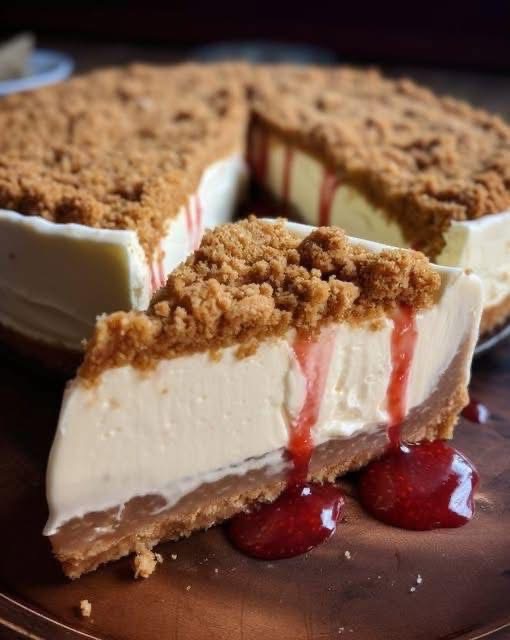
Of course! A double-crust cheesecake is a fantastic and decadent twist on the classic. Instead of just a bottom crust, it has a buttery, crumbly crust on both the bottom and the top.
The most famous version is likely the “Million Dollar Cheesecake” or a similar recipe that uses a shortbread-like crust. Here is a complete guide and recipe for making this incredible dessert.
The Allure of the Double Crust
· Texture Contrast: The buttery, slightly crunchy crust provides a wonderful contrast to the rich, creamy, and smooth cheesecake filling.
· Visual Appeal: It looks impressive and rustic, like a giant, delicious cookie stuffed with cheesecake.
· Portability: The top crust helps “seal in” the filling, making it a bit sturdier for potlucks or picnics.
Classic Double Crust Cheesecake Recipe
This recipe yields a rich, dense, and classic New York-style cheesecake encased in a sweet, crumbly crust.
Yields: One 9-inch cheesecake (12-16 servings)
Prep time: 30 minutes
Bake time: 60-70 minutes, plus several hours of cooling/chilling
Ingredients
For the Crust:
· 2 ½ cups all-purpose flour
· 1 cup (2 sticks) unsalted butter, softened
· ½ cup granulated sugar
· 1 large egg, lightly beaten
· 1 teaspoon vanilla extract
· A pinch of salt
For the Cheesecake Filling:
· 4 (8-ounce) blocks full-fat cream cheese, softened to room temperature
· 1 ¼ cups granulated sugar
· 4 large eggs, at room temperature
· 1 cup full-fat sour cream, at room temperature
· 1 tablespoon all-purpose flour
· 2 teaspoons vanilla extract
· ¼ teaspoon salt
Instructions
- Prepare the Crust Dough:
· In a medium bowl, cream together the softened butter and sugar until light and fluffy.
· Beat in the egg and vanilla extract until well combined.
· Gradually add the flour and salt, mixing until a soft, cohesive dough forms. It will be slightly sticky.
· Divide the dough into two unequal portions: one slightly larger (about 60%) for the bottom crust, and one slightly smaller (about 40%) for the top crust.
· Shape each portion into a disc, wrap in plastic wrap, and refrigerate for at least 30 minutes. This makes it easier to handle.
- Preheat Oven and Prepare Pan:
· Preheat your oven to 350°F (175°C).
· Grease a 9-inch springform pan.
- Press in the Bottom Crust:
· Take the larger disc of dough from the refrigerator. Place it between two sheets of parchment paper and roll it out into a circle large enough to cover the bottom and go about 1-1.5 inches up the sides of the springform pan.
· Carefully transfer the dough to the prepared pan. Press it firmly and evenly into the bottom and up the sides. Use your fingers or a small glass to smooth it out. Set aside.
- Make the Cheesecake Filling:
· In a large bowl, using an electric mixer on medium speed, beat the softened cream cheese until it is completely smooth and free of lumps. This is the most important step for a creamy texture.
· Gradually add the sugar and beat until combined.
· Beat in the eggs, one at a time, mixing just until each egg is incorporated. Do not overmix after adding the eggs.
· Scrape down the sides of the bowl. Add the sour cream, flour, vanilla extract, and salt. Mix on low speed until the filling is smooth and uniform.
- Assemble the Cheesecake:
· Pour the cheesecake filling into the crust-lined springform pan, smoothing the top with a spatula.
- Add the Top Crust:
· On a floured surface or between parchment paper, roll out the smaller disc of dough into a circle that will fit just inside the top of the pan.
· Carefully place this dough circle on top of the cheesecake filling. You can create a lattice top, or simply place the whole circle on top. If using a full circle, you may wish to cut a few small slits in the center to allow steam to escape.
· Optionally, you can brush the top crust with a little beaten egg or milk for a golden finish.
- Bake the Cheesecake:
· Place the springform pan on a baking sheet (to catch any potential drips) and bake for 60-70 minutes.
· The cheesecake is done when the edges are set, but the center still has a slight jiggle (like Jell-O) when you gently shake the pan. The top crust should be lightly golden brown.
· Important: Do not overbake, as the center will continue to set as it cools.
- Cool Slowly to Prevent Cracking:
· Turn off the oven and crack the oven door open with a wooden spoon. Let the cheesecake cool slowly in the oven for 1 hour.
· Remove it from the oven and let it cool completely to room temperature on a wire rack.
· Once cooled, cover it and refrigerate for at least 6 hours, but preferably overnight. This allows the flavors to meld and the texture to firm up perfectly.
- Serve:
· Run a thin knife around the edge of the cheesecake before releasing the springform pan collar.
· Slice with a sharp, thin knife dipped in hot water for clean slices.
Tips for Success & Variations
· Room Temperature is Key: Ensure all your filling ingredients (cream cheese, eggs, sour cream) are at room temperature. This prevents a lumpy filling and helps it bake evenly.
· Don’t Overmix: Once the eggs are added, mix on low speed and only until combined. Overmixing incorporates too much air, which can cause the cheesecake to puff up and then crack as it cools.
· The Water Bath (Bain-Marie): For the absolute creamiest texture with no risk of cracking, bake this in a water bath. Wrap the bottom of the springform pan tightly in heavy-duty aluminum foil to prevent water seepage. Place the pan in a larger roasting pan and pour hot water into the larger pan until it comes about halfway up the sides of the springform pan.
· Flavor Variations:
· Fruit Swirl: Before adding the top crust, drop spoonfuls of your favorite fruit pie filling or fruit puree (like raspberry or cherry) onto the cheesecake filling and swirl it gently with a knife.
· Lemon or Orange Zest: Add the zest of one lemon or orange to the filling for a bright, citrusy note.
· Chocolate Chip: Fold 1 cup of mini chocolate chips into the filling before pouring it into the crust.
Enjoy your masterpiece! This double-crust cheesecake is truly a show-stopping dessert.