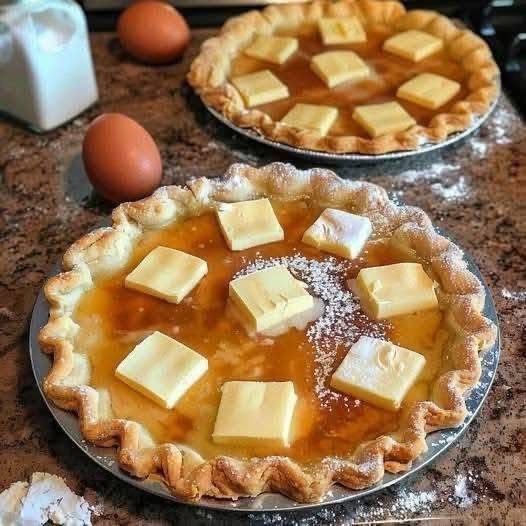
Of course. Depression Era Water Pie is a fascinating and humble dessert born out of necessity during the Great Depression when ingredients like milk, eggs, and butter were scarce and expensive.
The concept sounds impossible—a pie with a filling made mostly of water—but through the magic of baking, it transforms into a sweet, custardy, and slightly caramelized pie. It’s a testament to the ingenuity of home cooks who had to “make do.”
Here is the classic recipe, along with some context to appreciate it fully.
Depression Era Water Pie
This pie is defined by its simplicity and its surprising result. Don’t expect a complex flavor profile; expect a humble, sweet, and comforting dessert.
Yield: 1 (9-inch) pie
Ingredients
· 1 unbaked 9-inch pie crust (homemade or store-bought)
· 1 ½ cups water
· 4 tablespoons all-purpose flour
· 1 cup granulated sugar (white sugar is traditional)
· 5 tablespoons butter, cut into small pats (do not mix in)
· 1 teaspoon vanilla extract (a luxury in the Depression, but common today)
Instructions
- Prepare the Crust: Preheat your oven to 400°F (200°C). Place the unbaked pie crust into a 9-inch pie plate. You can flute the edges if you like.
- Make the Simple Filling: In a medium bowl, whisk together the water, flour, and sugar until the flour is mostly dissolved and the mixture is smooth. It will look like cloudy water. Stir in the vanilla extract.
- Assemble the Pie: Pour the water mixture directly into the unbaked pie shell. It will look very thin and worrisome—this is normal!
- The Key Step – Dot with Butter: Carefully place the pats of butter evenly over the surface of the watery filling. Do not stir it in. The butter will melt on top during baking and create a delicious, slightly caramelized layer.
- Bake to Transform: Place the pie on a baking sheet (to catch any potential drips) in the preheated oven.
· Bake at 400°F (200°C) for 30 minutes.
· Then, without opening the door, reduce the oven temperature to 375°F (190°C) and continue baking for another 30 minutes. - Cool Completely: The pie will be very jiggly when you first take it out. This is crucial: you must let the pie cool completely to room temperature, and then chill it in the refrigerator for at least 2-4 hours, or preferably overnight. During this cooling and chilling time, the filling will set up into a soft, custard-like consistency.
- Serve: Slice and enjoy a piece of history. The texture is soft and syrupy, with a buttery, slightly crisp top.
Why This Recipe Works & Important Tips
· The Science: The magic happens because the flour and sugar slowly thicken the water as it bakes, creating a simple syrup that sets into a gel. The butter floating on top melts and browns, creating a rich, caramelized flavor that infuses the entire pie.
· The Flavor Profile: The pie is very sweet, with a flavor reminiscent of a mild, buttery sugar cookie or the bottom of a pecan pie (without the nuts). It’s simple, nostalgic, and comforting.
· Do Not Skip the Chill: This is the most important step for the right texture. If you cut into it warm, it will be a runny mess.
· Variations: While not traditional, some modern twists include:
· Adding a pinch of salt to balance the sweetness.
· Sprinkling a little nutmeg or cinnamon over the top before baking.
· Using brown sugar for a deeper, more caramel-like flavor.
This pie is more than a recipe; it’s an edible history lesson. It’s a reminder of a time when waste was not an option, and a little creativity could turn the most basic ingredients into something sweet to look forward to. Enjoy