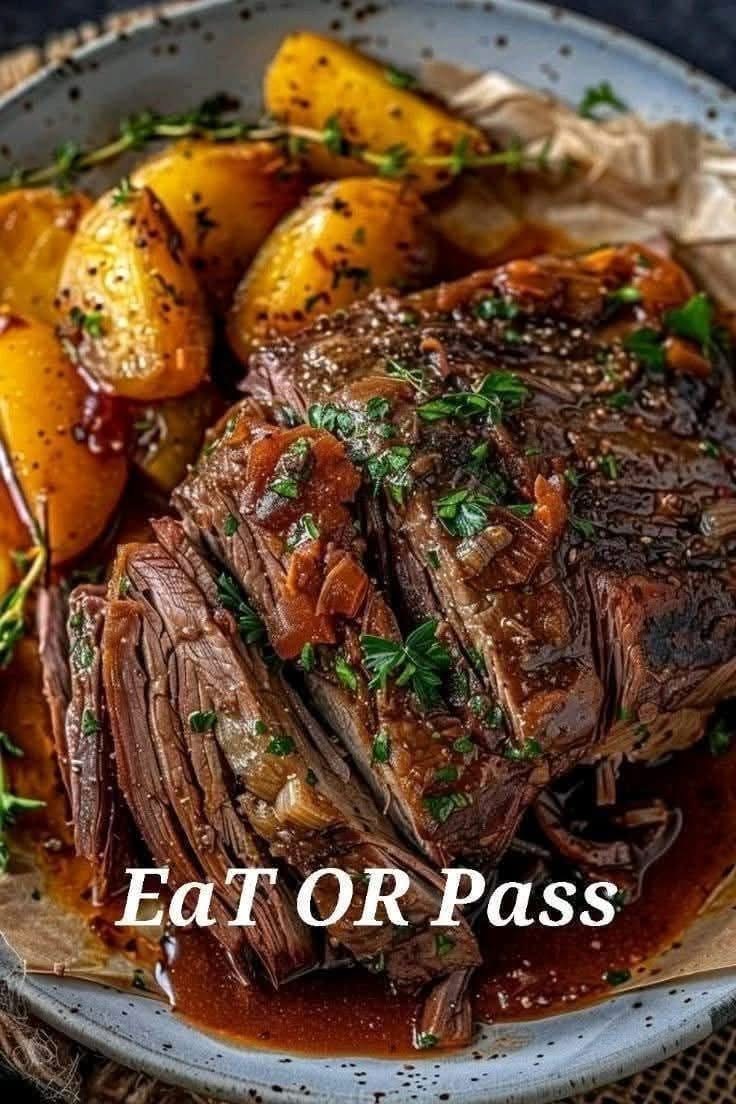
Classic Pot Roast with Potatoes and Carrots
This is the ultimate comforting one-pot meal, with tender, fall-apart beef and vegetables bathed in a rich, savory gravy. The secret is slow, gentle cooking that breaks down tough connective tissue into pure deliciousness.
Why This Recipe Works
· Choosing the right cut (chuck roast) ensures rich flavor and tender results.
· Searing deeply builds a flavorful foundation for the gravy.
· Low and slow cooking melts the collagen without drying out the meat.
· Adding vegetables at the right time prevents them from turning to mush.
Ingredients
For the Roast & Seasoning:
· 1 (3-4 lb / 1.4-1.8 kg) beef chuck roast
· 2 tsp kosher salt
· 1 tsp black pepper
· 2 tbsp all-purpose flour (optional, for dusting)
· 2 tbsp vegetable or olive oil
For the Aromatics & Braising Liquid:
· 1 large yellow onion, chopped
· 4 cloves garlic, minced
· 3-4 cups beef broth (low-sodium preferred)
· 1 cup red wine (like Cabernet) or additional broth
· 2 tbsp tomato paste
· 2 tbsp Worcestershire sauce
· 2 sprigs fresh thyme (or 1 tsp dried)
· 2 sprigs fresh rosemary (or 1 tsp dried)
· 2 bay leaves
For the Vegetables:
· 1.5 lbs (700g) Yukon Gold potatoes, cut into 2-inch chunks
· 4-5 large carrots, cut into 2-inch chunks
· 3-4 celery stalks, cut into 2-inch chunks (optional but classic)
For the Gravy (Optional Thickening):
· 2 tbsp cornstarch mixed with 2 tbsp cold water (slurry)
Instructions
Part 1: Sear the Meat (The Flavor Foundation)
- Pat the chuck roast completely dry with paper towels. Season generously on all sides with salt and pepper. For a thicker gravy, dust lightly with flour.
- Heat oil in a large Dutch oven or heavy-bottomed pot over medium-high heat. Sear the roast for 4-5 minutes per side, until a deep brown crust forms. Transfer to a plate.
Part 2: Build the Braising Liquid
- In the same pot, add the chopped onion. Cook for 4-5 minutes until softened. Add garlic and cook for 1 minute more.
- Stir in the tomato paste and cook for 1 minute until it darkens slightly.
- Pour in the red wine (or broth) to deglaze, scraping up all the flavorful browned bits from the bottom of the pot. Let it simmer for 2 minutes.
- Add the beef broth, Worcestershire sauce, thyme, rosemary, and bay leaves. Bring to a gentle simmer.
Part 3: The Slow Braise
- Return the seared roast to the pot, along with any accumulated juices. The liquid should come about halfway up the sides of the meat.
- Cover with a tight-fitting lid and reduce heat to low. Alternatively, you can transfer it to a 325°F (160°C) oven.
- Braise for 2.5 hours, undisturbed.
Part 4: Add Vegetables & Finish
- After 2.5 hours, add the potatoes, carrots, and celery around the roast. They should be mostly submerged in the liquid.
- Cover again and continue braising for another 1 to 1.5 hours, until both the meat and vegetables are fork-tender.
- Carefully transfer the roast and vegetables to a serving platter and tent with foil.
Part 5: Make the Gravy
- Strain the braising liquid into a saucepan, discarding the herbs. Skim excess fat from the surface with a spoon.
- Bring the liquid to a simmer. For a thicker gravy, whisk in the cornstarch slurry a little at a time until the desired consistency is reached. Season to taste with salt and pepper.
- Shred or slice the meat against the grain. Serve immediately with the vegetables and gravy poured over the top.
Pro Tips for Success
· Don’t skip the sear: This Maillard reaction is where a huge amount of flavor develops.
· Keep the simmer low: A bare bubble is what you want. A rolling boil will make the meat tough.
· Test for doneness: The roast is done when a fork twists easily in the meat. It should be tender but not completely falling apart when you lift it.
· Make it ahead: Pot roast often tastes even better the next day. Reheat gently on the stovetop.
Serving Suggestions
· Serve over or alongside buttered egg noodles, mashed potatoes, or creamy polenta to soak up the gravy.
· A simple green salad or crusty bread makes the perfect accompaniment.
Cook Time: ~4 hours (mostly hands-off)
Yield: Serves 6-8
Enjoy this timeless, nourishing classic—the heart of Sunday dinner.